Update on the IBHS Wildfire Prepared Home Program
Update on the IBHS Wildfire Prepared Home Program: Progress, Realities, and Community Pushback in California
Jon Gustafson
2/13/20262 min read
Update on the IBHS Wildfire Prepared Home Program: Progress, Realities, and Community Pushback in California
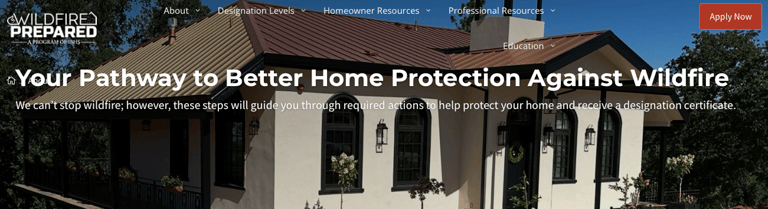
Recent data from the Insurance Institute for Business & Home Safety (IBHS) shows meaningful adoption of the Wildfire Prepared Home certification since its 2022 launch. Over 1,200 California homes have earned the designation (Base or Plus levels), with the program surpassing 1,000 certifications in the state by the end of its second year and continuing to grow—expanding into additional states like Oregon, Nevada, and New Mexico.
This program rewards homeowners for implementing proven mitigation steps, such as enhancing roofs, vents, defensible space, and the critical 0-5 foot "Zone Zero" area. Participating insurers often offer premium discounts ranging from 4% to 50% (or more in some cases), depending on the certification level (Base vs. Plus), the carrier, and specific policy details. For example, certain carriers provide up to 12.5% or higher reductions on wildfire-related portions of premiums for certified homes.
That said, challenges remain in high-risk wildfire zones. Insurance non-renewals and availability issues persist for many properties—even those with certification—due to broader market conditions, carrier risk appetites, and ongoing wildfire threats. Certification helps demonstrate resilience and may improve insurability or discounts, but it's not a guaranteed shield against cancellations in the most vulnerable areas.
Community Pushback on Zone Zero Standards
Not all stakeholders view the IBHS program—or the broader push for strict Zone Zero compliance—as fully practical or equitable. Homeowners associations in canyon communities in an around the Santa Monica Mountains, have voiced strong concerns through public comments to California's Zone Zero Regulatory Advisory Committee. These groups argue that the standards can feel overly idealistic or elite-focused: requiring extensive upfront investments, removal of protected trees (potentially conflicting with local laws), clearing on neighboring properties, and logistical issues like parking vehicles far from homes during red-flag warnings in dense neighborhoods.
Critics highlight that the program appears unattainable for the vast majority of the estimated ~2.12 million homeowners (or structures) in Very High Fire Hazard Severity Zones (VHFSZs) subject to emerging Zone Zero rules. State estimates from CAL FIRE and related sources indicate around 870,000 structures in Local Responsibility Area (LRA) VHFSZs plus 1.25 million in State Responsibility Areas (SRA) affected by Zone 0 requirements—totaling roughly 17% of all structures statewide (with population in high/very high zones approaching 3.7–5.1 million people per recent analyses). Yet with only ~1,200 certifications achieved so far, this represents a tiny fraction—less than 0.1%—of the potentially affected properties. Questions remain: Is widespread certification realistically attainable given the high costs, ongoing maintenance, re-certification every three years, and practical barriers in denser or lower-income areas? Critics urge the state to address affordability, feasibility, and environmental impacts before mandating changes that could burden millions.
At Fast Fire Response (FFR), we support proactive steps like these while delivering practical, community-focused solutions—such as our pool-based pumping systems and training—that complement home hardening efforts. Empowering residents with reliable, properly maintained equipment and knowledge, remains key to building true wildfire resilience, regardless of regulatory debates.
For the latest on the program, visit wildfireprepared.org